
The LosAltos Transaction Stability Model
Leadership instability during major transactions rarely appears randomly.
It emerges predictably as pressure builds inside the leadership system managing the process.
Where Transactions Break Down
In complex transactions, instability rarely appears randomly. It almost always emerges in the same structural places inside leadership teams as pressure builds.
As scrutiny intensifies and timelines compress, small inconsistencies compound. Decisions slow, narratives drift, and operational rhythm begins to fracture.
These moments are often interpreted externally as weaknesses in the business itself. In reality, they usually reflect stress inside the leadership system managing the transaction.
The LosAltos Transaction Stability Model identifies the structural control points where this instability tends to surface.
Five Control Points of Transaction Stability
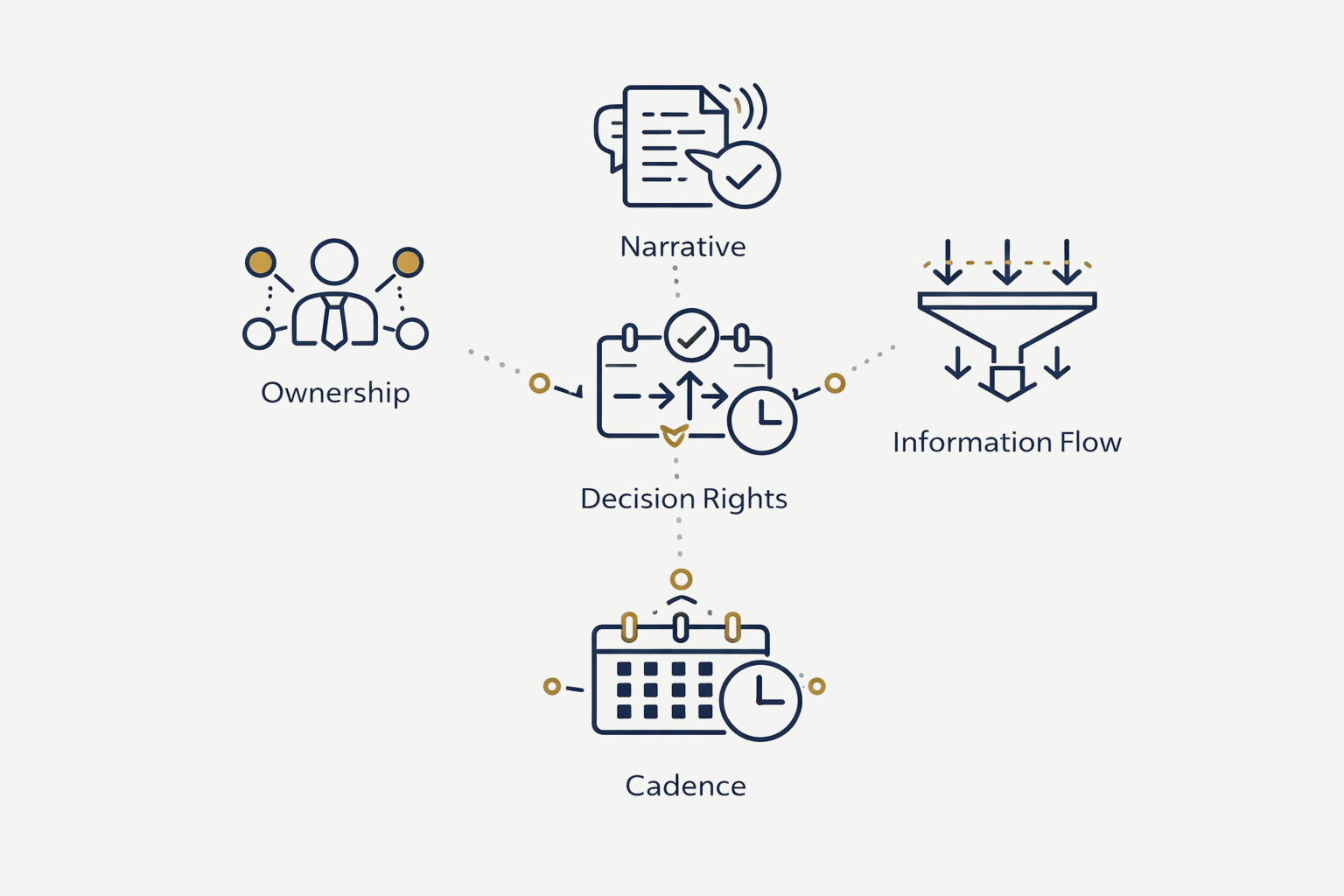
Across transactions, leadership instability most often emerges at five control points:
(1) Ownership
Decision authority must remain clear as pace accelerates.
(2) Narrative
Leadership must articulate how the business actually works before others define it.
(3) Decision Rights
Critical decisions must remain anchored even as new stakeholders engage.
(4) Cadence
Operational rhythm must hold while transaction demands expand.
(5) Information Flow
Internal communication must remain disciplined as scrutiny increases.
LosAltos works alongside leadership teams at these control points to maintain stability as transaction pressure builds.
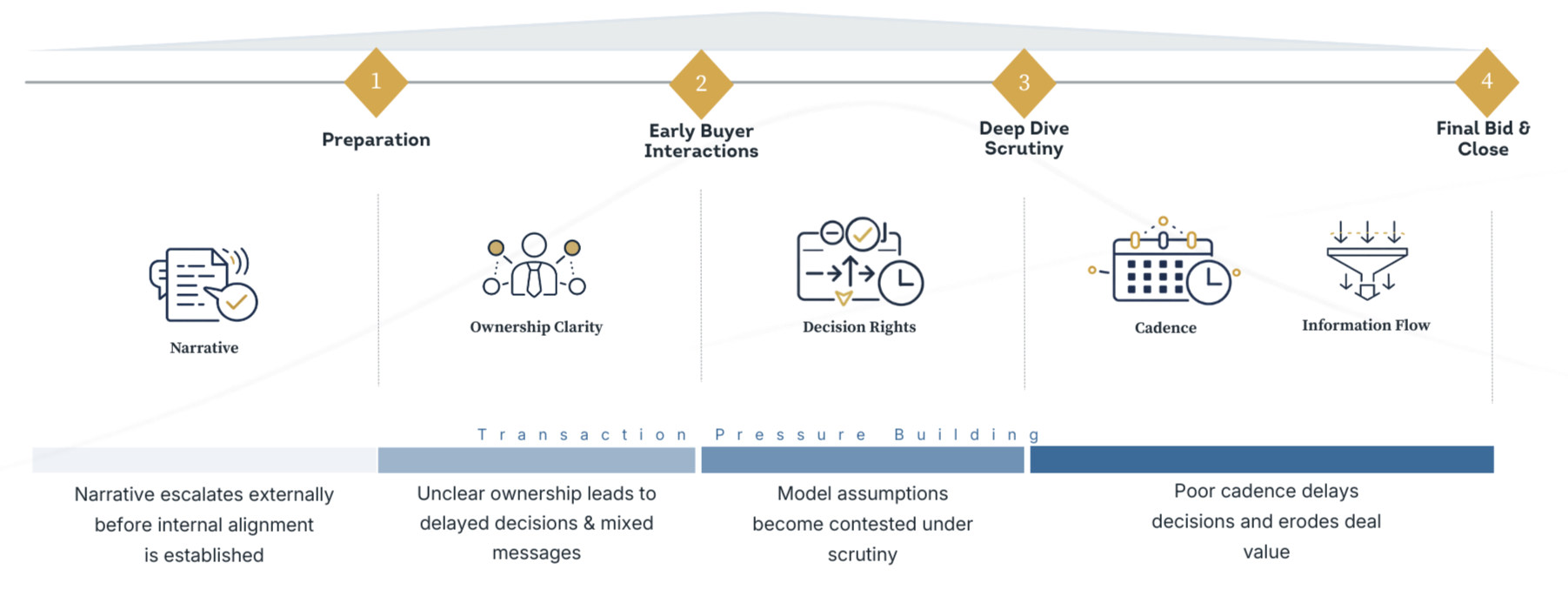
Transaction pressure does not appear all at once. It builds gradually as a process unfolds.
Early preparation typically begins with alignment around narrative and ownership. As buyer engagement increases, decision rights and leadership coordination become more visible. During deep diligence, cadence and information flow determine whether leadership remains steady or begins to fragment.
Understanding where pressure builds allows leadership teams to anticipate instability before it compounds.